
On my patch – Birding in Bayacas, la Alpujarra
Posted on: 5 January 2026
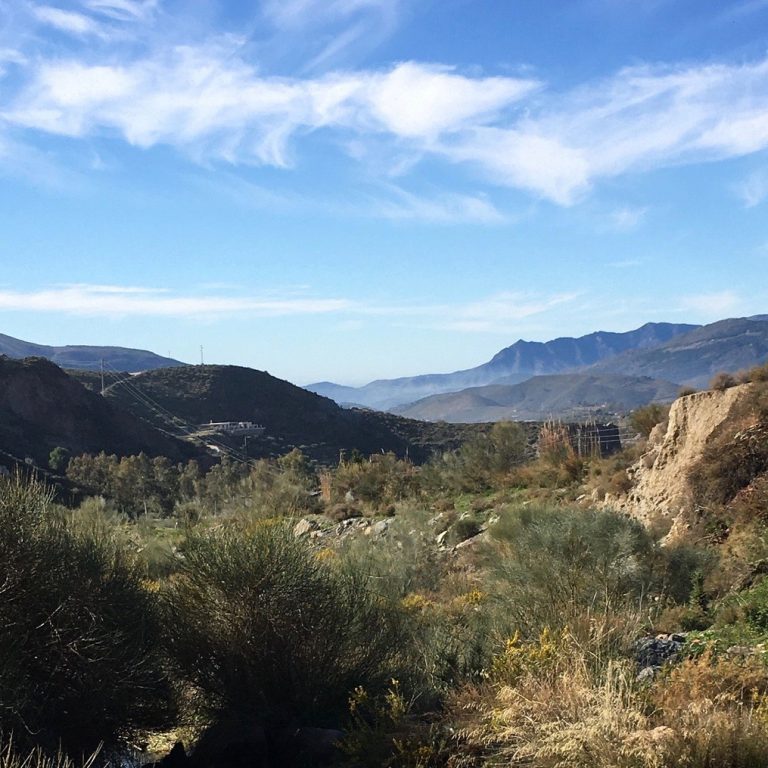
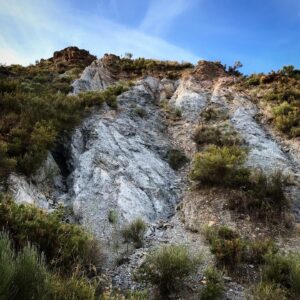
Between the town of Orgiva and the famous white villages of Pampaneira, Bubion and Capileira lies the small, whitewashed village of Bayacas. Situated at 650mts in the foothills of Sierra Nevada, less than a kilometer from the national park boundary.
Nestled in the Rio Chico valley, we are blessed to have the river carving it’s way down through the village and flowing with water during winter and spring. Like many parts of la Alpujarra, the landscape offers a diverse range of habitats within easy walking distance. I couldn’t really have found myself in a better place to begin my birding journey.
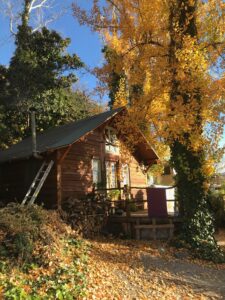 I live just outside the village, in a wooden cabin cosseted by towering poplars situated next to an old water mill, which is continually fed by one of the last open asequias remaining here in the village. Traditionally poplars were a landmark for farmers bringing their grain by donkey so they could see from a distance the location of the mills. I am certain they would have also used the sun and the moon for guidance but I wonder if, in days of old, they also used birdsong to help them navigate?
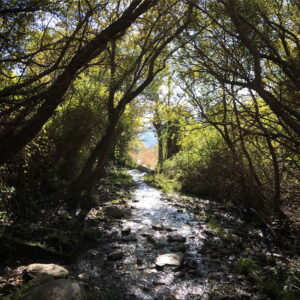
The ancient method of flood irrigation from asequias is severely under threat. Fear of water scarcity means more drip-lines are being installed whilst these ancient waterways are being replaced with plastic tubes all over Andalucia. It doesn’t take much knowledge of ecology to understand the impact this is having on the environment and it’s inhabitants.
Behind the house flows the asequia and there’s also wild cherry trees, nispero and mulberry. There’s quite a lot of abandoned land with olive and almond trees as well as walnut and nettle trees. Nesting places are abundant… so lots to entice our feathered friends! Taller trees such as the poplars, provide safe nesting for the shy-to-be-seen Golden Orioles with their distinctive tune and it’s a delight to be able to glimpse a flash of yellow as they dart between the treetops in the early morning light. In a cluster of eucalyptus opposite the village they can also be heard most summer mornings.
Alongside the cabin a small pond teeming with frogs provides a nocturnal melody, overlaying the rhythm of flowing water once the relentless call of cicadas subsides. As the light fades, small bats begin to go about their evening activities as the distinctive sound of the Scops Owl echos through darkness.
As the seasons shift we begin welcome back our cooler-climate friends such as the Common Hoopoe and Nightingale. Spring brings a dawn chorus of unimaginable magnificence and this unique moment of the year often sees many migratory birds crossing paths. It’s hard to put into words how intoxicating it is to awaken to Bee Eaters and Golden Orioles overhead as the Nightingales are full swing, whilst Chaffinches, Robins, Blackcaps, Tits, Finches, Thrushes and more raise their voices to celebrate the dawn of a new day!
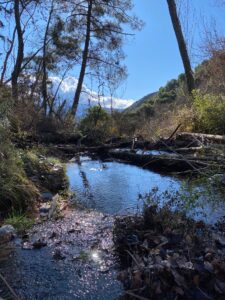
The wide range of habitat entices a dazzling array of birds with the changing seasons.
In cooler months Red Squirrels are equally at home hopping between the trees and these seasonal visitors delight in startling Spotted Woodpeckers, who’s rhythmic tap signals the start of the mating season. This year seems we have had more Eurasian Collard Doves than ever who also enjoy the poplars, as do the regular community of Blackbirds who can be found rummaging through the abundance of leaf-litter before taking flight with a juicy worm or two between their beak.
Once or twice I have been able to spot Herons on neighbouring land. But it takes a more experienced birder to be able to identify the various Eagles, Hawks and Kestrels that swirl overhead. A novice like me, is left captivated by their awesome presence and reminded how the homework at ‘nature school’ never ends!
Living in such confronting times of human suffering and environmental destruction challenges us all in different moments. But living amongst such a vibrant community of birds reminds me not only of the resilience of nature but also how important diversity is in creating harmony in a thriving ecosystem.
Thank you to all the wild beings that surround me and keep inspiring me through their presence. We human beings really have a lot to learn, or should I say, remember.
If you are interested to know more about my live-in mentoring opportunity for young people between 20-30 years of age, please get in touch.
For more information about the vital conservation work taking place or to become a member visit the Andalucia Bird Society.

